Sorry to keep this official. Big brother is watching.
"Brazil" is a wonderfully delightful film. Quirky, funny, and tense all at the same time. I'm not sure why it grooved with me, but it did. I think I can explain what the movie is about without any spoilers as follows: "Brazil" is like Orwell's "1984" meets Tim Burton, who then had a baby with "A Clockwork Orange," who is being raised in "Pee-Wee's Big Adventure."
For those who are watching to check off films in which Deniro is in, he really only has an insignificant part, so be prepared.
I don't know much else about what write. The story works, even though it is very odd, and the set designs/production is intentionally and obviously bizarre (I want to say "low budget," but I don't know if that's true).
And I did really like the ending. Twist-ish, without being trite or obvious.
Anyway, that's what I thought.
Sunday, July 4, 2010

Thursday, June 24, 2010
Introducing the Official Podcast of This Blog:

That's right! That's what that says ...
The Considering the Cinema film discussion blog now has an official podcast called CONSIDERING THE SEQUELS.
Considering the Sequels is a monthly film podcast that examines the merits and weaknesses of specific movie franchises. In Episode 1 we consider the "Back to the Future" trilogy.
My fellow film blogger, Andy Howell; my life-long best pal, Bill Barnes; and I, Jason Pyles, host the show. We three and a varying special guest review the individual installments of the franchise in story order to collectively determine whether each sequel is a worthy continuation of the primary film — or if it’s a just another instance of cinematic dead horse beating.
Each episode also features a concept discussion, where we talk about matters pertaining to sequels or the cinema, in general. These discussions are often spawned by listening to excerpts from pre-recorded interviews with various sorts of experts. We also discuss new releases and whatever else we’ve watched recently.
If you're a fan of this site, please give our podcast a try. You can vote on which one of us you tend to agree with most, and you can let us know what state you're listening from. Hope you'll visit us.
Sincerely,
Jason Pyles
Tuesday, June 15, 2010
Hukkle and Another Bad Movie Recommendation
Prelude
This post will ultimately be about “Hukkle,” I promise, but with all this best-worst movie talk surrounding “Troll 2,” I have to insist on one more bad movie recommendation here. “Battlefield Earth: A Saga of the Year 3000” (2000) is the kind of movie Andy refers to in his post for “Troll 2” — it’s bad but still entertaining. I actually have a lot to say about it, but in an effort to shorten my posts, I’ll simply refer you to this episode of KCRW’s The Business, where you can learn all the background you’ll ever need to know. It’s a must-see if you like entertainingly bad movies. It’s hard to believe that “Battlefield Earth” turned out as it has, considering that it was made so recently, in these modern times of movie magic — with a bankable talent like John Travolta — and with a reported production budget of $73 million dollars, according to Box Office Mojo. Anyway, if you haven’t seen it, rent it and your mind will be blown in a special kind of way. Tiny spoiler to give you an example of what I’m talking about: Travolta plays a sadistic alien, and at one point he actually calls another character a “knot head.” (For extra funny irony, be sure to watch the behind-the-scenes, making-of special feature and note the way the filmmakers describe the movie.)
“Hukkle”
All experimental films are “unusual,” so I guess we could simply discuss only experimental films and fulfill the objective of this site. But I just couldn’t take it. I knew Andy wouldn’t be able to stay awake through “Hukkle.” A couple of posts below Andy said “The Puffy Chair” was pointless. Well, “Hukkle” is the epitome of pointless, and I’m sorry I chose to subject us to it. But luckily, you don’t have to watch it.
“Hukkle,” which means “hiccup,” is a Hungarian film written and directed by György Pálfi. It opens with a slithering snake. We watch the snake’s uncoiling during the credit sequence. Now, this is typical for a credit sequence: We’re usually shown something unrecognizable that’s barely interesting enough to keep our attention. But we have the promise of the film to follow, so we wait it out. Well, “Hukkle” continues to give us opening-credit-sequence-like imagery.
An elderly man has hiccups. We watch him for longer than we are willing. I’m no actor, so I’m not sure how difficult it would be to “act” like I have hiccups. Surely there was an audition process for this task. Assuming there was, I can only conclude that this guy was chosen because he has a wrinkled face that makes for interesting close-ups — which there are plenty of. But this guy fake hiccups and smiles about it, like he’s a child on a merry-go-round. (Anyone who’s ever had hiccups before knows you don’t just keep smiling about it. Hiccups are irritating; perhaps that explains this appropriately titled, filmic indulgence.)
Now, if I seem like I’m nitpicking the smallest, most insignificant details, it’s because these hiccups are in fact the film’s largest, most significant detail.
For these kinds of films, often the word “experimental” should be read as “non-narrative film,” meaning there’s no story, or as Andy terms it, “pointless.” Basically, “Hukkle” just shows us a bunch of random footage — often in close-up — of various people, animals, insects, objects and machinery just going about the regular hum of life.
Believe me, the best moments or imagery from the film are all shown in the trailer. Watch the trailer, and you’ll get the point. But in short, here are the things “Hukkle” shows us: hiccups, people, animals, machinery, nature, hiccups, people eating, animals eating, hardly any dialogue, hiccups, a long, super close-up of pig testicles, recurring characters, hiccups, etc., etc. You get the point.
Now, there are people who grasp at straws to assemble a narrative through-line for this film. Well, I refute this, and for my evidence, I can explain this rather simply — it’s called “the Kuleshov effect.” Allow me to explain:
Editing is among the most powerful techniques employed in the cinema. It effortlessly manipulates our understanding of how the images portrayed onscreen interrelate both thematically and spatially. Lev Kuleshov was a Russian film theorist who conducted an experiment that proved that various shots edited together didn’t have to have any sort of relationship in actuality, but because they are edited together, the viewer’s mind draws certain conclusions. If I recall correctly, in Kuleshov’s experiment he showed a viewer a picture of a person with a blank expression and then a bowl of soup and then a blank expression again. That viewer was sure the person looked hungry. He did the same thing with a different viewer and replaced the bowl of soup with a casket. That viewer was sure the actor was portraying sadness.
We, as filmgoers, are conditioned to draw conclusions between the images flashed onscreen, that we might assemble and decipher a story from the filmed images. And I’d assert that those who insist on as much from “Hukkle” have simply been “Kuleshoved.”
But even if the writer-director himself, György Pálfi (I assume that’s a male’s name), told me he had in fact constructed a faint and subtle narrative within his film, I’d still dismiss it as little more than a Lumière brothers actuality, along the lines of “Arrival of a Train at La Ciotat” (circa 1895 / 1896), but not quite as artistic.
Wednesday, June 9, 2010
"Hukkle" as watched by Andy
I know that we've discussed this before on this blog, but here again is a perfect example of how some artsy independent films can alienate viewers. In the same way that many pieces of modern art have symbolism and meaning that are lost on the general public, so too will "Hukkle" find few viewers who will watch the entire film and then have anything intelligent to say.
I'm really trying to be better and more sophisticated about films and criticism of such films, but I don't understand what "Hukkle" is all about.
Let me see if I can save everyone 75 minutes of their lives and describe "Hukkle." The film is a plotless expose on life in a poor Hungarian town. It is shot as several random closeups, panning shots, and other artsy cinemtographically interesting shots. The subject of the shots are generally people doing random things: from working, to eating, sitting, watching, walking, conversing, etc. There are several animals film in what appears to be natural habitat. And there's one guy who hiccups who is in several parts of movie sitting on a bench. That's about it. There is hardly any dialogue.
Who recommended this movie, and why? I would really love to hear some comments from someone who can explain what I a missing. I had to pop in "Pirates of the Caribbean" just so I could get back to normal.
UPDATE
Ok, maybe I was just too tired from staying up late the night before with Jason watching all three "Back to the Future" movies, but I really didn't get it. I guess I realized towards the end that there was something to the ladies, the liquids, and something about the cop, but it was largely over my head. Wikipedia does a good job of explaining the plot, so I won't get into it, but check it out for a total rebuttal of my "plotless" comment. I guess I'm just not astute enough at all things filmic to understand "Hukkle." Good luck to you if you give it a go.
I'm really trying to be better and more sophisticated about films and criticism of such films, but I don't understand what "Hukkle" is all about.
Let me see if I can save everyone 75 minutes of their lives and describe "Hukkle." The film is a plotless expose on life in a poor Hungarian town. It is shot as several random closeups, panning shots, and other artsy cinemtographically interesting shots. The subject of the shots are generally people doing random things: from working, to eating, sitting, watching, walking, conversing, etc. There are several animals film in what appears to be natural habitat. And there's one guy who hiccups who is in several parts of movie sitting on a bench. That's about it. There is hardly any dialogue.
Who recommended this movie, and why? I would really love to hear some comments from someone who can explain what I a missing. I had to pop in "Pirates of the Caribbean" just so I could get back to normal.
UPDATE
Ok, maybe I was just too tired from staying up late the night before with Jason watching all three "Back to the Future" movies, but I really didn't get it. I guess I realized towards the end that there was something to the ladies, the liquids, and something about the cop, but it was largely over my head. Wikipedia does a good job of explaining the plot, so I won't get into it, but check it out for a total rebuttal of my "plotless" comment. I guess I'm just not astute enough at all things filmic to understand "Hukkle." Good luck to you if you give it a go.
Monday, June 7, 2010
"The Puffy Chair" as seen by Andy
Hmm...."The Puffy Chair" is, to me, a perfect example of why most people are going to have a difficult time with indy films. Let me say at the outset that I am getting better and enjoying bizarre films, but every so often I run into a film that I didn't really enjoy, and that I don't get.
Here's what I don't understand about "The Puffy Chair": what's the point? I just didn't really get it. I get that the film has very little to do about a chair, but what it does seem to be about, i.e. relationships and tension, doesn't seem to make any sense, have any resolve, or have any particular point.
What the film ends up being to me is a very long, obvious, yet arduous breakup. And I didn't really care for either character. Emily's character, who I believe is probably the most compassionate, is very emotional, irritating, and quite erratic. One moment she is wanting "Schmoopy talk," and the next she is hysterically destructive. And Josh is even worse. He treats Emily like crap, doesn't give her the attention she clearly needs, and ultimately passive-aggressively convinces her to break up with him.
Frankly, the only thing I enjoyed about the movie's script was that they did end up breaking up for good.
As for the rest of the film, I quite enjoyed the production values, and I thought the acting was superb.
It's a tough one though if you are looking for an entertaining film.
Here's what I don't understand about "The Puffy Chair": what's the point? I just didn't really get it. I get that the film has very little to do about a chair, but what it does seem to be about, i.e. relationships and tension, doesn't seem to make any sense, have any resolve, or have any particular point.
What the film ends up being to me is a very long, obvious, yet arduous breakup. And I didn't really care for either character. Emily's character, who I believe is probably the most compassionate, is very emotional, irritating, and quite erratic. One moment she is wanting "Schmoopy talk," and the next she is hysterically destructive. And Josh is even worse. He treats Emily like crap, doesn't give her the attention she clearly needs, and ultimately passive-aggressively convinces her to break up with him.
Frankly, the only thing I enjoyed about the movie's script was that they did end up breaking up for good.
As for the rest of the film, I quite enjoyed the production values, and I thought the acting was superb.
It's a tough one though if you are looking for an entertaining film.
Sunday, June 6, 2010
"Troll 2" as reviewed by Andy
WOW!!! Seriously folks, for all seven of our readers, if you watch any of the movies that we review, watch "Troll 2" and "Best Worst Movie." Watch in that order. Friends have suggested that you don't necessarily need to watch "Troll 2" before watching "Best Worst Movie," the idea being that you wouldn't have to endure the 90 minutes of the original movie. I disagree. I don't think you can appreciate the phenomenon that "Best Worst Movie" captures without having agonized through the entire thing.
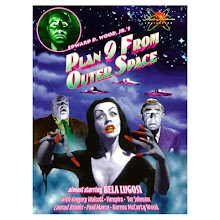
I don't really know what to say other than it might be the epitome of bad films. We've watched several now for our blog, and this one might be the most entertaining. It's great. Several prestigious film lists agree. See imdb and wiki for lists of the worst films that include "Troll 2," "Plan 9 from Outerspace," and "The Room," to name a few that we've seen. And again, as we've discussed before, a film's badness can actually be a good thing, and can make a film watchable. I.e., I will never again see "Master of Disguise" or "The Forbidden Kingdom," but I would watch "Plan 9" and "Troll 2" again, even though the later are far worse than the former.
What I think is remarkable about the film is not how bad it is (and it is VERY BAD), but how some of the participants have continued in their denial about how terrible the show actually is. That's the essence of "Best Worst Movie." It is incomprehensible to me that the director could possibly blame anyone other than himself for the terrible qualities of the film. Yet he steals the show ("Best Worst Movie") with his unintelligible defense of the film. I honestly can do justice here describing this further, so just watch it. It's absolutely brilliant.
Anyway, see it with some friends and be come a Nilbog-ian. And share in the neurosis.
I don't really know what to say other than it might be the epitome of bad films. We've watched several now for our blog, and this one might be the most entertaining. It's great. Several prestigious film lists agree. See imdb and wiki for lists of the worst films that include "Troll 2," "Plan 9 from Outerspace," and "The Room," to name a few that we've seen. And again, as we've discussed before, a film's badness can actually be a good thing, and can make a film watchable. I.e., I will never again see "Master of Disguise" or "The Forbidden Kingdom," but I would watch "Plan 9" and "Troll 2" again, even though the later are far worse than the former.
What I think is remarkable about the film is not how bad it is (and it is VERY BAD), but how some of the participants have continued in their denial about how terrible the show actually is. That's the essence of "Best Worst Movie." It is incomprehensible to me that the director could possibly blame anyone other than himself for the terrible qualities of the film. Yet he steals the show ("Best Worst Movie") with his unintelligible defense of the film. I honestly can do justice here describing this further, so just watch it. It's absolutely brilliant.
Anyway, see it with some friends and be come a Nilbog-ian. And share in the neurosis.
Tuesday, June 1, 2010
Bonus Review: Troll 2 and Best Worst Movie
 by Jason Pyles
If you love unusual movies and you haven't seen the infamous "Troll 2"
(1990) yet, then you need to go watch it free on Hulu.com. It has been called the "best worst movie," but for my money, the best worst movie is still "Killer Klowns From Outer Space" (1988). (It's presently available on Netflix Watch
Instantly; there's no excuse not to watch "Killer Klowns.") And then there's
always "Monkey Shines" (1988), which is also notable, but not nearly as entertaining as the
aforementioned pair. "Troll 2," which doesn't have one troll in it, is about a family who is terrorized by a gaggle of vegetarian goblins. And since the goblins don't eat meat, they have
 to trick humans into eating their specially prepared foods, which transform the victims into plants that can therefore be eaten. Now, you have to admit, that's pretty original material. (The luring victims to eat repeatedly becomes awkward and tiresome, however — not an easy plot for the screenwriters to sustain; to see an equally difficult writing challenge handled much more effectively, watch "Perfume: The Story of a Murderer." That killer was a big "smeller.")
Hence the charm of "Troll 2." Even though the performances, writing, special effects, costumes (and everything else) are poorly executed, the movie is so odd and so bizarre that it defies the typical criteria that constitute entertainment value as we know it. It's no wonder people love "Troll 2." It is truly one of the most unusual films I've ever seen — and I've seen some unusual ones. "Troll 2" is like an unsettling dream. I must admit that it does have a few moments that almost border on creepy. And that's a compliment because this is somehow accomplished in the midst of its wacky weirdness and unintentional humor.
On May 28 I had the pleasure of attending the Tower Theater in Salt Lake City for a screening of "Best Worst Movie," a documentary by Michael Stephenson — the now-grown little boy, Joshua Waits, who starred as the protagonist of "Troll 2." In case you don't know, here's the story, as I understand it, behind "Best Worst Movie":
"Troll 2" was filmed in Utah in 1989 under a different title, probably "Nil Bog," which is "goblin" spelled backward. (I'm sure some fanboy will inform me.) Nothing seemed to come of the production until, in the early '90s, little by little, the actors started seeing their B-movie on cable channels or hearing about it from friends. Because it is so poorly made, most of the actors — including a young Michael Stephenson — were ashamed of it. Years passed and while the actors tried to forget about it, their cinematic mistake became a cult phenomenon. "Best Worst Movie" is the hilarious documentation of this film's cult popularity, its fans and its filmic associates.
I hadn't yet seen "Troll 2" before seeing the documentary, but it wasn't altogether necessary, because many clips from the original movie are interspersed throughout the documentary. I recommend seeing both films, in any order. They're both entertaining and enjoyable.
"Best Worst Movie" is oddly humorous and simultaneously sad. It strikes a similarly bizarre emotional chord, much like its inspiration. The Italian director of "Troll 2," Claudio Fragasso, steals the show through his apparent high regard for the artistic merits of his film — at one point comparing it to "Casablanca" and "Gone With the Wind." We learn that his wife, Rossella Drudi, co-wrote the screenplay with him, and the vegetarian-goblins idea came from her having friends who were vegetarians, and her script was meant to poke at them a little.
At my screening, I was lucky enough to enjoy a Q&A afterward with five members of the cast of "Troll 2," including Michael Stephenson (Josh), Jason Steadman (Drew), Gavin Reed (the Present son who threw the baseball), Deborah Reed (Creedence Leonore Gielgud) and Darren Ewing (Arnold).
From their Q&A I found out that the mind-blowingly bizarre film the friends are watching in the motor home is a terrible Italian film called "Grunt!" (1983). At one point Michael said the director was asked why this was filmed in Utah: Michael said his answer was, "We didn't choose Utah; Utah chose us." The male actors listed above said they earned $100 a day on the shoot. The budget for "Troll 2" was $600,000, but Michael remembered complaining of having been given only stale pizza to eat. And the kid whose plant growth covers his mouth in the creepy church (I think it was Darren Ewing as Arnold), he was said to have stood (quite painfully) in that get-up for 14 hours while filming.
As I've learned about the filmmaking process, the creative and artistic differences and the challenges of financing a movie and so forth, I've often said it's a wonder when a movie is actually made. And I've said it's a miracle when a "good" movie is made.
Obviously, sometimes out of that horrific process comes a by-product that might be described as cinematic toxic sludge. It's ugly, but it's tantalizing. It's dim-witted, but it glows. It's filled with goblins, but it's called "Troll 2."
Subscribe to:
Posts (Atom)